
Horizontal vs Vertical Metal Bandsaws in Australia
Which is right for your Workshop?
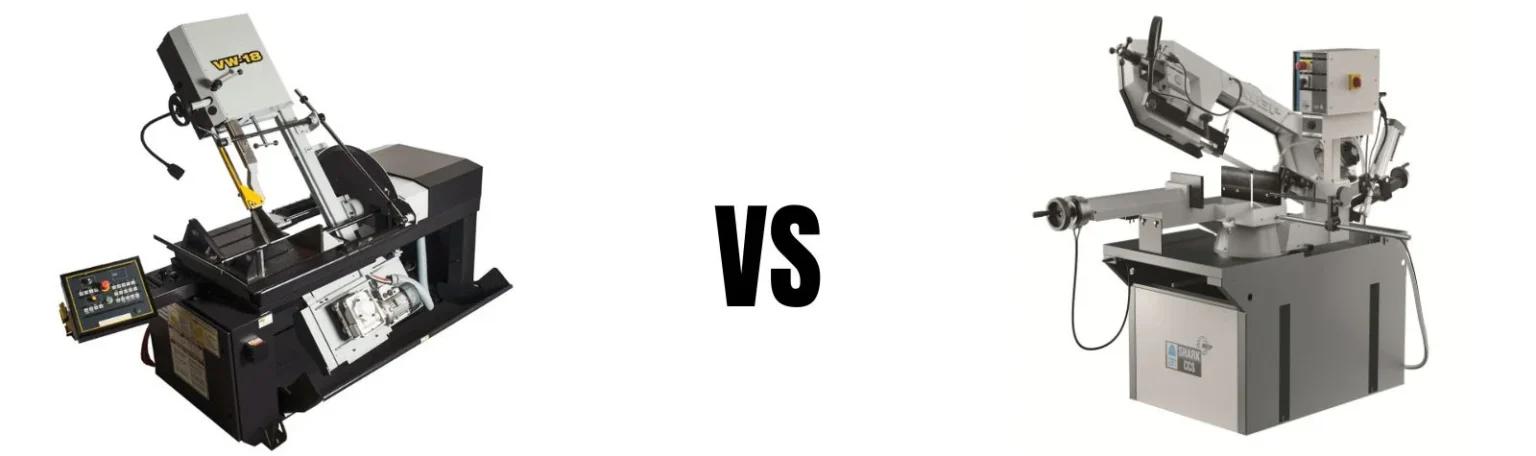
A horizontal metal bandsaw is designed for straight, repetitive cutting of bar, tube and structural steel.
A vertical metal bandsaw is used for contour cutting, plate work and custom fabrication.
Horizontal machines dominate production workshops, while vertical models suit flexible shaping applications.
When choosing a metal bandsaw for steel fabrication, one of the most important decisions for Australian workshops is whether to invest in a horizontal bandsaw or a vertical bandsaw.
Both machines are widely used across industrial metal cutting applications — from structural steel processing to precision engineering and fabrication — but they serve very different production environments.
In Australia, most high-volume industrial metal cutting bandsaws used in steel fabrication workshops are horizontal automatic metal bandsaws due to their ability to deliver straight, repetitive cuts and automation capability. Vertical metal bandsaws, on the other hand, are typically used for contour cutting, plate work and custom fabrication tasks.
As a leading Australian supplier of MEP and Hydmech metal bandsaws, Power Machinery provides fully automatic CNC bandsaws, semi-automatic and manual bandsaws in both horizontal and vertical configurations. This guide explains the key differences so you can choose the right bandsaw for your workshop, production volume and long-term growth plans.
What is a Horizontal Bandsaw?
- The saw head pivots or travels horizontally
- The blade cuts downward through the material
- The material is clamped in a vice
- The machine completes straight, square cuts
- Cutting bar, tube and RHS
- Structural steel preparation
- Repetitive production cutting
- Batch processing
Key advantages of Horizontal Bandsaws
- Excellent for straight cutting
- Strong clamping for heavy materials
- Suitable for automation
- High production efficiency
- Available in manual, semi-automatic and automatic versions
Most automatic metal bandsaws in Australia are horizontal machines due to their suitability for repetitive production work.
What is a Vertical Bandsaw?
- The blade runs vertically
- The workpiece is manually guided into the blade
- The operator controls the feed direction
- Contour cutting
- Irregular shapes
- Plate cutting
- Toolroom and fabrication work
- Precision custom work
Key aDVANTAGES OF vERTICAL bANDSAWS
- Ideal for curved or irregular cuts
- Excellent for plate work
- Suitable for fabrication shops
- Compact footprint
- Greater operator control
HORIZONTAL VS VERTICAL BANDSAWS: KEY DIFFERENCES
Here is a practical comparison relevant to Australian steel workshops:
| FEATURE | HORIZONTAL BANDSAWS | VERTICAL BANDSAWS |
|---|---|---|
| Primary Use | Straight cutting of bar and tube | Contour and shape cutting |
| Automation | Available in automatic and semi-automatic | Typically manual |
| Production Volume | Medium to high | Low to moderate |
| Material Handling | Clamped vice system | Operator-fed |
| Best for | Structural steel, RHS, repetitive cutting | Plate, irregular shapes, custom work |
| Labour reduction | High (with automation) | Operator dependent |
| Price Range | Entry to high level investment (depending on automation) | Typically lower investment |
The biggest distinction is automation and production output.
If your workshop cuts hundreds of pieces of steel per day, a horizontal automatic bandsaw will typically deliver greater productivity.
If your workshop performs varied fabrication work with custom shapes, a vertical bandsaw may be more suitable.
Need Help Choosing the Right Metal bandsaw?
Speak to our Australian team for expert advice on horizontal, vertical, automatic or semi-automatic models
How Automation Impacts the Decision
- Manual bandsaws
- Semi-automatic bandsaws
- Fully automatic CNC bandsaws
Manual Horizontal Bandsaws
Manual bandsaws require operator positioning and control. They are ideal for:
- Smaller workshops
- Maintenance businesses
- Light fabrication
- Budget-conscious buyers
Manual machines offer simplicity and lower investment.
Semi-Automatic Horizontal Bandsaws
- Jobbing workshops
- Moderate production
- Mixed material cutting
- Growing businesses upgrading from manual systems
Automatic Horizontal Bandsaws
- Material clamping
- Feeding to length
- Cutting cycle
- Repetition without operator intervention
- High-volume production environments
- Structural steel processing
- Fabricators cutting repetitive lengths
- Workshops focused on labour efficiency
When should you Choose a Horizontal bandsaw?
- You regularly cut bar, tube or RHS
- You require square, consistent cuts
- You want automation capability
- You are processing structural steel
- You want to reduce labour input
- You expect production growth
When should you Choose a Vertical Bandsaw
- You cut plate regularly
- You need contour cutting
- Your work involves irregular shapes
- You operate a toolroom environment
- You require detailed fabrication work
Production Strategy: Which Configuration Supports Growth?
- How many cuts do we make per day?
- Are cuts repetitive or varied?
- Are we processing structural steel?
- Is labour efficiency a priority?
- Do we expect production to increase in the next 2–3 years?
Investment and Long Term Strategy
- Lower cost per cut
- Faster production
- Reduced manual handling
- Greater output consistency
- Improved safety
MEP and Hydmech Bandsaws in Australia
As Australia’s leading supplier of MEP and Hydmech bandsaws, Power Machinery has the in-house experience to offer servicing and spare parts for all bandsaws machines we sell across Australia, from major cities to reginal towns.
Power Machinery provides:
- Manual horizontal bandsaws
- Semi-automatic horizontal bandsaws
- Fully automatic CNC metal bandsaws
- Vertical bandsaws
- Small to large capacity machines
- Nationwide delivery and support
Both MEP (Italy) and Hydmech (North America) are internationally recognised manufacturers of industrial metal cutting bandsaws used across steel fabrication and engineering industries.
Our team can help you compare:
- Cutting capacity
- Automation level
- Pivot vs double column design
- Blade size and motor power
- Budget requirements
- Future production growth
Final Thoughts: Horizontal or Vertical?
-
Horizontal bandsaws dominate structural cutting
- Semi-automatic models suit moderate daily volumes
- Automatic bandsaws support scaling production
- Manual bandsaws suit entry-level or low-output environments
-
Vertical bandsaws excel at contour and plate work
Choosing correctly ensures your investment supports both current production needs and future growth.
Need Expert Advice Choosing the Right Metal Bandsaw?
Choosing between a horizontal and vertical metal bandsaw isn’t just about cutting direction — it’s about production efficiency, labour reduction and long-term return on investment.
If you’re investing in a metal cutting bandsaw in Australia, our team can help you compare:
- Cutting capacity and material types
- Manual vs semi-automatic vs automatic models
- Pivot vs double column design
- CNC automation options
- Budget and financing solutions
- Future production growth
With decades of experience supplying MEP and Hydmech industrial bandsaws across Australia, we provide expert guidance, nationwide delivery, installation and ongoing technical support across Sydney, Melbourne, Brisbane, Perth and regional Australia.
Explore our Full Range
- Automatic metal bandsaws
- Semi-automatic metal bandsaws
- Manual metal bandsaws
- Horizontal metal bandsaws
- Vertical metal bandsaws
- All our Metal Machinery range
Or contact Power Machinery for expert advice on (02) 8445 8555 or email info@powermachinery.com.au
Trusted Australian Supplier
Supplying industrial metal bandsaws across Australia to fabrication, manufacturing and engineering workshops.
Industrial Grade Global Brands
Premium automatic metal saws from leading European and North American manufacturers including MEP and Hydmech.
Installation and Technical Support
In-house service department with full installation, commissioning and operator training available Australia-wide.
Finance & Flexible Purchasing
Finance options available to help workshops invest in the right metal cutting equipment for your needs.
Nationwide Delivery
Metal bandsaws delivered and supported across Sydney, Melbourne, Brisbane, Perth, Adelaide and regional Australia.
Frequently Asked Questions
The main difference between a horizontal and vertical bandsaw is the cutting orientation and production purpose. Horizontal metal bandsaws cut downward through clamped material and are ideal for straight, repetitive cuts in steel fabrication. Vertical bandsaws have a vertically positioned blade and are used for contour cutting, plate work and irregular shapes.
Yes, horizontal metal bandsaws are generally better suited for steel fabrication workshops that require consistent straight cuts of bar, tube and structural steel. They are also available in semi-automatic and automatic models for higher production efficiency.
A vertical bandsaw is best for contour cutting, shaping plate, toolroom work and custom fabrication tasks. They are commonly used where flexibility and operator control are more important than repetitive production output.
Automatic metal bandsaws are worth the investment for workshops cutting high daily volumes. They automate material feeding and cutting cycles, reduce manual handling, increase throughput and lower cost per cut over time.
In Australia, horizontal metal bandsaws are the most common type used in structural steel and fabrication workshops due to their versatility and automation options.
Yes, semi-automatic bandsaws are suitable for moderate production environments. They automate the cutting cycle but require manual material positioning, making them ideal for growing fabrication businesses.