
Metal Rolling Machines – Types, Applications & Buying Guide (Australia)
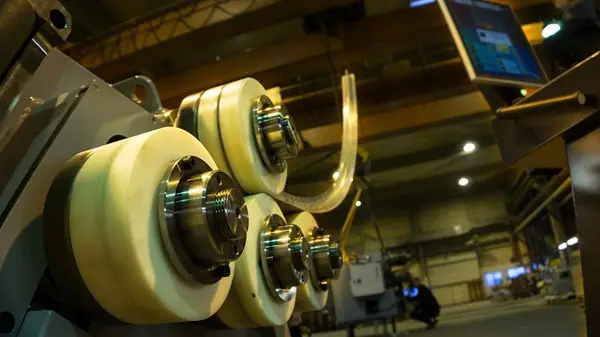
What are metal rolling machines?
Metal rolling machines are industrial forming machines used to bend and shape metal into curved profiles, cylinders, cones or radiused sections. In fabrication workshops, they are essential for producing tanks, pressure vessels, pipe sections, structural frames and architectural components. The term metal rolling machines is a broad industry category that typically includes two main types of equipment:
Plate rolling machines, which roll flat sheet or plate into cylinders and curved forms
Section rolling machines, which roll structural profiles such as angle, channel, flat bar, pipe and RHS
While both operate on the same rolling principle — using rotating rolls to progressively bend material — they are designed for very different applications and material types.
Plate rolling machines are primarily used in heavy fabrication, tank manufacturing and mining applications where thick steel plate must be formed into precise cylindrical shapes. Section rolling machines, often called angle rollers or profile rollers, are used in structural steel fabrication to create curved beams, rings, frames and handrails. Metal rolling machines are often used alongside press brakes and guillotines in fabrication workshops.
Choosing the right metal rolling machine depends on the material type, thickness, section profile and production volume required. As an Australian supplier of industrial rolling equipment, we help fabrication workshops select the correct plate or section rolling machine for their specific application.
Types of Metal Rolling Machines
There are two primary types of metal rolling machines used in fabrication workshops: plate rolling machines and section rolling machines. While both use rotating rolls to progressively bend material, they are engineered for different material forms and applications.
Plate Rolling Machines
Plate rolling machines are designed to roll flat sheet or heavy steel plate into cylindrical or conical shapes. These machines are widely used in industries such as pressure vessel manufacturing, tank fabrication, mining, marine and structural steel.
Modern plate rollers are available in:
3 roll configurations
4 roll configurations
Hydraulic or mechanical drive systems
Light fabrication through to heavy-duty industrial capacities
Plate rolling machines are ideal for forming:
Steel cylinders
Silos and storage tanks
Pressure vessels
Pipe sections
Cones and rolled shells
If your workshop regularly forms flat sheet or thick plate into curved shapes, a dedicated plate rolling machine is the correct solution.
View our full range of Plate Rolling Machines.
Section Rolling Machines (Angle & Profile Rollers)
Section rolling machines — also known as angle rollers or profile rollers — are designed to bend structural sections rather than flat plate. These machines use specially profiled rolls to form materials such as:
Angle
Channel
Flat bar
Round bar
Pipe
RHS and SHS
I-beam and T-sections
Section rolling machines are commonly used in structural steel fabrication, architectural metalwork, handrail manufacturing and frame construction where curved profiles are required.
Unlike plate rollers, section rollers are engineered to control distortion while forming structural profiles into arcs, rings or complex curved shapes.
Explore our range of Section Rolling Machines.
Choosing the Right Metal Rolling Machine
Selecting the correct metal rolling machine depends on:
Material type (plate vs structural section)
Thickness or section size
Required rolling diameter
Production volume
Industry application
If you are unsure which type of machine suits your workshop, our team can provide expert advice based on your fabrication requirements. Contact Us for assistance.
Plate Roller vs Section Roller - What's the Difference?
Although both machines fall under the category of metal rolling machines, plate rollers and section rollers are designed for very different fabrication tasks.
Understanding the difference is critical when selecting the right equipment for your workshop.
Material Type
The primary distinction lies in the material being formed.
Plate rolling machines are used to bend flat sheet or heavy steel plate into cylindrical or conical shapes.
Section rolling machines are used to bend structural profiles such as angle, channel, flat bar, pipe, RHS and I-beam.
If you are rolling flat material into tanks or cylinders, you need a plate roller. If you are rolling structural sections into arcs or rings, you need a section roller.
Machine Design
Section rolling machines use interchangeable profiled rolls that match the shape of the structural section being formed. These rolls control distortion while allowing the material to curve evenly.
The tooling and geometry of each machine are fundamentally different.
Typical Applications
| Plate Rolling Machines | Section Rolling Machines |
|---|---|
| Pressure Vessels | Structural Frames |
| Storage Tanks | Handrails and Balustrades |
| Silos | Curved Beams |
| Pipe Sections | Ring Fabrication |
| Heavy Plate Fabrication | Architectural Steel |
Capacity Considerations
Our metal rolling machines are available for steel plate from 2mm to 50mm thickness and rolling widths up to 3,000mm. Section rolling machines can accommodate angle sizes up to 200mm and heavy structural profiles depending on configuration.
Plate rolling machines are typically rated by:
Maximum plate thickness
Maximum rolling width
Yield strength of material
Section rolling machines are rated by:
Maximum section size (e.g., angle size, beam depth)
Profile type
Minimum achievable rolling diameter
Choosing the wrong machine type can result in inefficient production or inability to form the required material.
Which Machine is Right for your Workshop?
If your business focuses on tank fabrication, pressure vessels or rolling heavy sheet metal, a plate rolling machine is essential.
If your workshop specialises in structural steel, architectural metalwork or curved framing, a section rolling machine will be the correct solution.
Many larger fabrication facilities operate both types of rolling machinery to cover a full range of metal forming applications.
If you are unsure which type of metal rolling machine best suits your application, our team can provide guidance based on your material specifications and production requirements.
Metal Rolling machines for Sale in Australia
Power Machinery supplies high-quality metal rolling machines to fabrication workshops across Australia. Whether you require a heavy-duty plate rolling machine for tank and pressure vessel production or a precision section rolling machine for structural steel and profile forming, we can recommend the right solution for your application.
Our range includes:
3 roll and 4 roll plate rolling machines
Hydraulic and CNC controlled systems
Section rolling machines for angle, channel, flat bar, pipe and beam
Industrial models suitable for light fabrication through to heavy-duty production
We work closely with workshop owners, engineers and production managers to ensure the selected machine matches your material type, thickness requirements and expected output.
When you purchase from Power Machinery, you receive:
Expert pre-sale advice
Installation and commissioning support
Operator training
Ongoing Australian service and parts support
Metal Rolling Machine FAQs
The main difference between a 3 roll and 4 roll plate rolling machine is how the material is gripped and pre-bent.
A 3 roll plate roller typically uses two fixed lower rolls and one adjustable top roll. It is a cost-effective solution and widely used in general fabrication. However, it often requires more operator skill and repositioning to achieve precise pre-bending at both ends of the plate.
A 4 roll plate roller uses two central drive rolls and two side rolls for bending. This design allows for:
Better material control
More accurate pre-bending
Reduced flat ends
Higher productivity for repeat work
4 roll machines are commonly preferred in production environments where precision and efficiency are critical.
The thickness a metal rolling machine can handle depends on the machine type and capacity.
Light fabrication plate rolling machines may handle steel plate from approximately 2mm to 6mm thickness, while heavy-duty industrial plate rollers can roll 20mm, 30mm or 50mm+ steel plate, depending on width and material grade.
Section rolling machines are rated differently — by maximum section size rather than plate thickness. For example, they may be specified for particular angle sizes, beam depths or RHS dimensions.
Capacity selection depends on:
Material type
Material yield strength
Required rolling diameter
Machine width and roll diameter
Selecting the correct capacity is critical to ensure consistent performance and long-term reliability.
No — plate rolling machines and section rolling machines are designed for different material forms.
Plate rolling machines are built to roll flat sheet or heavy steel plate into cylindrical or conical shapes using smooth cylindrical rolls.
Section rolling machines use specially profiled rolls designed to support and control structural sections such as angle, channel, flat bar, pipe and beam.
Because the tooling, roll geometry and machine design are fundamentally different, one machine cannot effectively perform both tasks. Workshops that work with both flat plate and structural sections typically operate separate machines for each application.
The cost of a metal rolling machine in Australia varies depending on machine type, capacity and level of automation.
As a general guide:
Light fabrication plate rolling machines may start from tens of thousands of dollars
Heavy-duty hydraulic or CNC plate rollers can range significantly higher depending on thickness and width capacity
Section rolling machines vary based on section size capacity and configuration
Factors influencing price include:
Maximum thickness or section size
Machine width
Hydraulic vs mechanical drive
CNC control systems
Brand and build quality
For accurate pricing, it is important to specify material type, thickness and production requirements to ensure the machine is correctly matched to your application.
Metal rolling machines are widely used across the fabrication and manufacturing sector.
Industries commonly using plate rolling machines include:
Tank and pressure vessel manufacturing
Mining and heavy fabrication
Marine and shipbuilding
Structural steel
Energy and infrastructure projects
Section rolling machines are commonly used in:
Structural steel fabrication
Architectural metalwork
Handrail and balustrade manufacturing
Frame and ring fabrication
Industrial construction
Many larger fabrication workshops operate both types of metal rolling machines to cover a broad range of metal forming applications.