
Roundo Plate Roller Machines
Roundo Plate Roller Machines: What they were, why they mattered and what they have become
For decades, Roundo was one of the most respected names in plate rolling, profile bending and heavy fabrication machinery. A Roundo plate roller was not just another workshop machine. For many fabrication businesses, it was a long-term production asset trusted to roll steel plate, bend structural sections and handle demanding industrial work year after year.
Across Australia and around the world, Roundo machines became known for strength, durability and engineering quality. Many fabricators still operate older Roundo bending machines today, which says a lot about the quality of the original design. In industries where machine downtime is expensive and accuracy matters, the Roundo name built a reputation that lasted.
But the Roundo story has changed over time. The original Swedish Roundo operation moved through a period of change, and after Roundo departed Sweden, Peter Nilsson, the former CEO of Roundo, formed Swebend with a team of some of Roundo’s best, brightest and most experienced people.
For owners of existing Roundo machines, this history is important. It means that while the original Roundo brand has changed, much of the deep Swedish bending knowledge that made Roundo famous continues through Swebend.
At Power Machinery Australia, we are proud of our decades-long association with Peter Nilsson and Swebend. This partnership allows us to support existing Roundo users with expert advice, service support, Roundo roller parts and modern upgrade options. It also allows us to offer new Swebend machines for customers looking for the next generation of plate and section bending technology.
If you own a Roundo machine, are searching for a Roundo plate roller, or are trying to choose the best plate roller for your fabrication business, this article explains the history, the transformation and the modern options available.
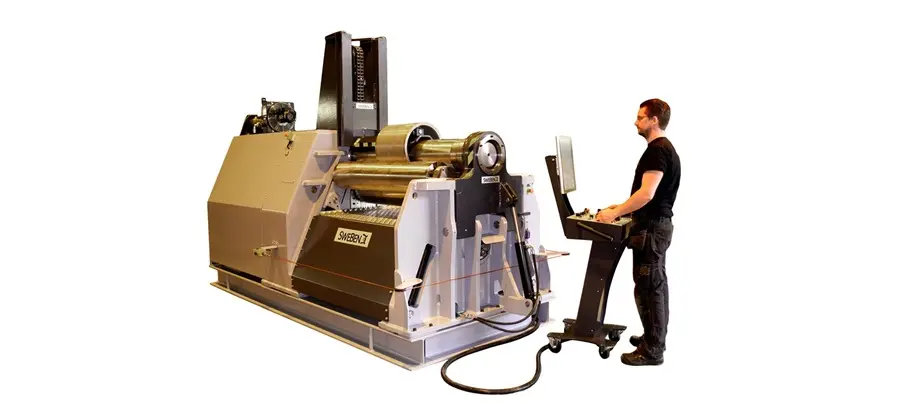
What was Roundo?
Roundo was a Swedish manufacturer of plate rolling machines, section bending machines and profile bending equipment. The company became widely known in the metalworking industry for producing heavy-duty bending machines used in demanding fabrication environments.
A Roundo plate roller was designed to take flat metal plate and roll it into curved, cylindrical or conical shapes. These machines were used in industries such as:
- Tank manufacturing
- Pressure vessel fabrication
- Pipe and ducting production
- Shipbuilding
- Structural steel fabrication
- Wind tower and energy infrastructure
- Mining and industrial equipment
- Architectural metalwork
- General heavy fabrication
Roundo also became well known for section bending machines, which are used to bend beams, channels, angles, flat bar, pipe, tube and other profiles. These machines allowed fabricators to create accurate curved steel components for buildings, bridges, transport infrastructure, marine projects and industrial applications.
The Roundo name became associated with machines that were heavily built, powerful and long lasting. In many workshops, a Roundo plate roller was considered a premium machine because it could handle difficult jobs and remain in service for decades.
Why Roundo Became a Trusted Name in Plate Rolling
The reason Roundo became so respected was simple: the machines were built for serious work.
Plate rolling is not a light-duty process. When a machine bends steel plate, it must control enormous forces. The rolls, frame, hydraulic system, bearings, electrical controls and machine geometry all need to work together. If the machine is poorly built, the result can be inaccurate rolling, excessive deflection, poor repeatability, damaged material or premature machine wear.
Roundo machines earned their reputation because they were engineered for strength and reliability. Many Roundo plate roller machines were designed with heavy frames, robust roll systems and the power needed for demanding rolling work.
For fabricators, this mattered because a plate roller is often central to production. If a plate roller stops working, projects can stop. If a machine cannot achieve the required bend, the business may lose time, material and money. That is why many companies invested in Roundo equipment.
A good Roundo plate roller gave fabricators confidence. It allowed them to roll plate accurately, support repeat production and take on work that required strength and precision.
Roundo Section bending Machines
Although many people search for the term Roundo plate roller, Roundo was also highly regarded for section bending machines.
Section bending machines are used to bend profiles rather than flat plate. This includes:
- I-beams
- H-beams
- Channels
- Angles
- Flat bar
- Square tube
- Rectangular tube
- Pipe
- Solid bar
- Custom profiles
This type of bending is technically demanding because each profile behaves differently under load. A beam bends differently from a pipe. An angle twists differently from a flat bar. A tube may distort if the tooling or machine setup is not correct.
Roundo section bending machines became known for handling these challenges. Many fabricators used Roundo machines because they could bend complex profiles with strength and consistency.
What Happened to Roundo?
Over time, the original Roundo business changed. Roundo departed Sweden, and the brand became part of a different global structure.
For existing Roundo owners, this created an important question: where could they find the right expertise, service support and parts knowledge for their machines?
That is where Swebend became extremely important.
After Roundo departed Sweden, Peter Nilsson, the former CEO of Roundo, formed Swebend. He was joined by a team of highly experienced people from Roundo. This meant that much of the practical knowledge behind Roundo’s success continued in a new Swedish company focused on plate rolls, section bending machines and advanced forming technology.
This is the key point for Australian fabricators: the Roundo name remains important, but the knowledge and experience behind many of the original Swedish Roundo machines lives on through Swebend.
From Roundo to Swebend: The Evolution of Swedish bending Experience
Swebend represents the next stage in the evolution of Swedish plate and section bending technology.
The company was formed by people with deep experience in Roundo machines, bending applications and machine design. Instead of simply copying the past, Swebend has taken that experience and combined it with modern hydraulic systems, electrical systems, wireless controls and advanced CNC technology.
For customers, this creates a powerful combination. Swebend offers new machines that reflect modern production needs, while also providing knowledge that is highly relevant to existing Roundo owners.
At Power Machinery Australia, our partnership with Swebend allows us to support customers in two important ways.
First, we can help existing Roundo users keep their machines running through service support, advice and Roundo roller parts.
Second, we can offer modern Swebend plate rollers and section bending machines to customers looking for a new machine with advanced features and strong factory support.
Upgrading a Roundo Plate Roller
One of the strongest options for existing Roundo owners is a machine upgrade.
A Roundo plate roller may still have a solid mechanical foundation, but the hydraulic, electrical and control systems may no longer meet modern production expectations. Upgrading these systems can transform the way the machine performs.
In partnership with Swebend, Power Machinery Australia’s Service Team can assist with upgrades such as:
- New hydraulic systems
- New electrical systems
- Bluetooth handheld controls
- Modern operator interfaces
- The latest 7 CNC controls
- Improved reliability and control systems
- Better production repeatability
These upgrades can make an older Roundo machine easier to operate, easier to maintain and more suitable for modern fabrication work.
A Bluetooth handheld control can be especially useful because plate rolling often requires the operator to view the workpiece from different positions. Better visibility can help improve setup, rolling accuracy and operator confidence.
Modern CNC controls can also make a major difference. CNC technology allows operators to store programs, repeat successful jobs, reduce manual trial and error and improve consistency across repeated parts.
For businesses producing repeat work, this can be a significant productivity improvement.
Repair, Upgrade or Replace your Roundo Plate Roller
If you own a Roundo plate roller, you may eventually need to decide whether to repair, upgrade or replace the machine.
There is no single answer for every business. The best option depends on the condition of the machine and the type of work you need it to perform.
Repair may be suitable when:
The machine is generally working well but needs specific parts, servicing or troubleshooting. If the mechanical structure is sound and the machine still meets your production needs, targeted repair may be the most cost-effective option.
Upgrade may be suitable when:
The machine is mechanically strong but has outdated hydraulics, electrical systems or controls. In this case, modernising the Roundo machine may provide better reliability, safety and productivity without the cost of a complete replacement.
Replacement may be suitable when:
The machine no longer has the capacity, accuracy, speed or features required for your current work. If your business needs more advanced production capability, a new Swebend plate roller or section bending machine may be the better long-term investment.
The important thing is to get expert advice before making the decision. A Roundo machine should not be dismissed simply because it is old. Many older Roundo machines were built with a level of strength that makes them excellent candidates for modernisation.
The Modern Transformation of Roundo
So what has Roundo transformed into?
The answer is that the Roundo legacy now exists in more than one form.
The Roundo brand continues in the global market, but many of the people and much of the expertise behind the original Swedish Roundo story moved forward through Swebend.
Existing Roundo machines continue to operate in workshops because they were strongly built. With the right support, parts and upgrades, many can remain productive for years.
At the same time, Swebend offers the modern evolution of Swedish bending technology, combining deep industry experience with modern controls, hydraulics, electrical systems and CNC functionality.
For customers, this transformation provides a practical pathway. You can maintain and upgrade your existing Roundo plate roller, or you can move into a new Swebend machine with modern features and factory-backed support.
Swebend Plate Rollers and Section bending Machines

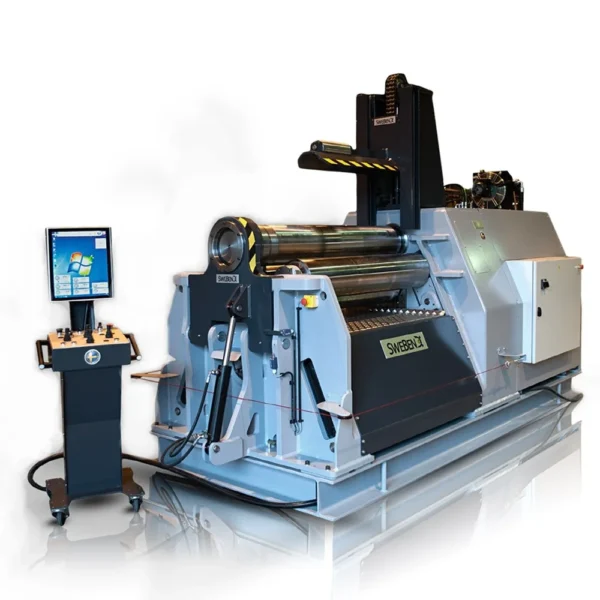
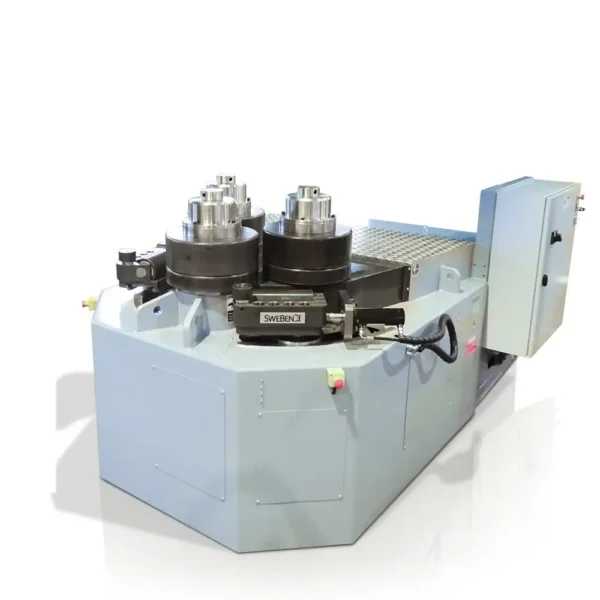
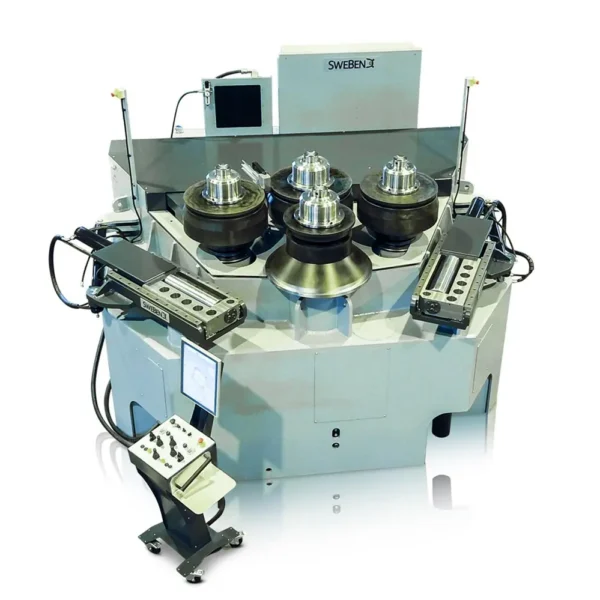
How do you get more information?
Choosing the right plate roller or section bending machine for your business is a crucial decision that can impact your operational efficiency and profitability. By considering factors such as maximum plate thickness and width, material type, production volume, CNC requirements and budget, you can find a plate roller or section bender that meets your needs and helps your business thrive. Take the time to research, consult experts, and plan for the future to ensure your investment pays off.
If you would like to chat through your business’ needs regarding plate rollers or section bending machines, please contact us on (02) 8445 8555 or email us at info@powermachinery.com.au